One of the most powerful aspects of the Punjabi Migration to Wolverhampton exhibition at Wolverhampton Art Gallery was the central role played by a team of local volunteers. Known as the Citizen UK Researchers, a term used by lead partner the National Portrait Gallery, the group consisted of 14 participants, many from the local Punjabi diaspora.
BCVA director and artist Anand Chhabra was appointed lead artist for the project, bringing together an arts-focused programme developed through co-creation and co-production with the community. Over the course of nine months, Anand worked closely with the volunteer researchers, supporting them with training in archiving, oral history recording and interview techniques so that they could help document the migration stories of Punjabi communities in Wolverhampton.
As part of the project, Anand was also commissioned by the National Portrait Gallery to create a series of photographic portraits of participants connected to the community’s history. The resulting exhibition combined archival photographs, ephemera, oral histories and newly commissioned portraits, offering a rich and layered exploration of Punjabi migration to the city.
The audio stories featured within the exhibition were edited by Anand Chhabra and technically produced by volunteer Akashi Kohli, using recordings gathered by researchers through digital dictaphones and, in some cases, mobile phones. Many interviews lasted several hours, with each story carefully edited into accessible recordings of around ten minutes.
Community researchers also played an important role in shaping the exhibition itself. Raveena Jassal contributed to curatorial decisions that helped ensure the exhibition resonated with Punjabi audiences, including Punjabi-language interpretation, culturally relevant design references and an interactive space where visitors could reflect on Punjabi migration to Wolverhampton and share their responses to the project.
The exhibition featured stories from a remarkable range of participants whose lives reflect the diversity and contribution of Punjabi communities in the city. These included pioneering figures such as Tarsem Singh Sandhu, who challenged the 1968 ban on Sikh bus drivers wearing turbans; Harjinder Kaur, who supported Punjabi women in accessing health services and community resources; and Bishan Dass, the first mayor of Wolverhampton and the first mayor of Indian origin in the UK.
Other contributors included Kuli Kohli, Wolverhampton’s first disabled Poet Laureate of South Asian heritage; Kash of the influential Bhangra band Azaad, which achieved international success; Dharma Pal, European Champion and World Runner-Up powerlifting champion in 1977–78; and Mak Singh, whose childhood inspiration from the Bollywood film Dharam Veer eventually led him into the world of film himself.
The exhibition also included reflections from Sathnam Sanghera, who spoke about his early years in Wolverhampton before becoming a prominent journalist and Times columnist, alongside the story of his mother, whose experiences of early migration in one of the city’s most densely populated neighbourhoods had previously gone unrecorded. Participants such as Harbans Heera, who helped establish one of the first Sikh places of worship in the city, and Mrs Jain, one of Wolverhampton’s earliest Asian women teachers, also contributed important stories.
Together, these first-hand accounts form an invaluable historical record. The interviews and materials collected during the project will be preserved within Wolverhampton City Archives, ensuring that these stories remain accessible to future generations.
This ambitious project brought together the work of many people in a relatively short period of time. BCVA would like to extend sincere thanks to the volunteer researchers, participants and partners who made it possible. Special thanks go to Emily Stone and Alex Talbot at the National Portrait Gallery, and Carol Thompson at Wolverhampton Art Gallery, whose support and dedication were instrumental in realising the exhibition.
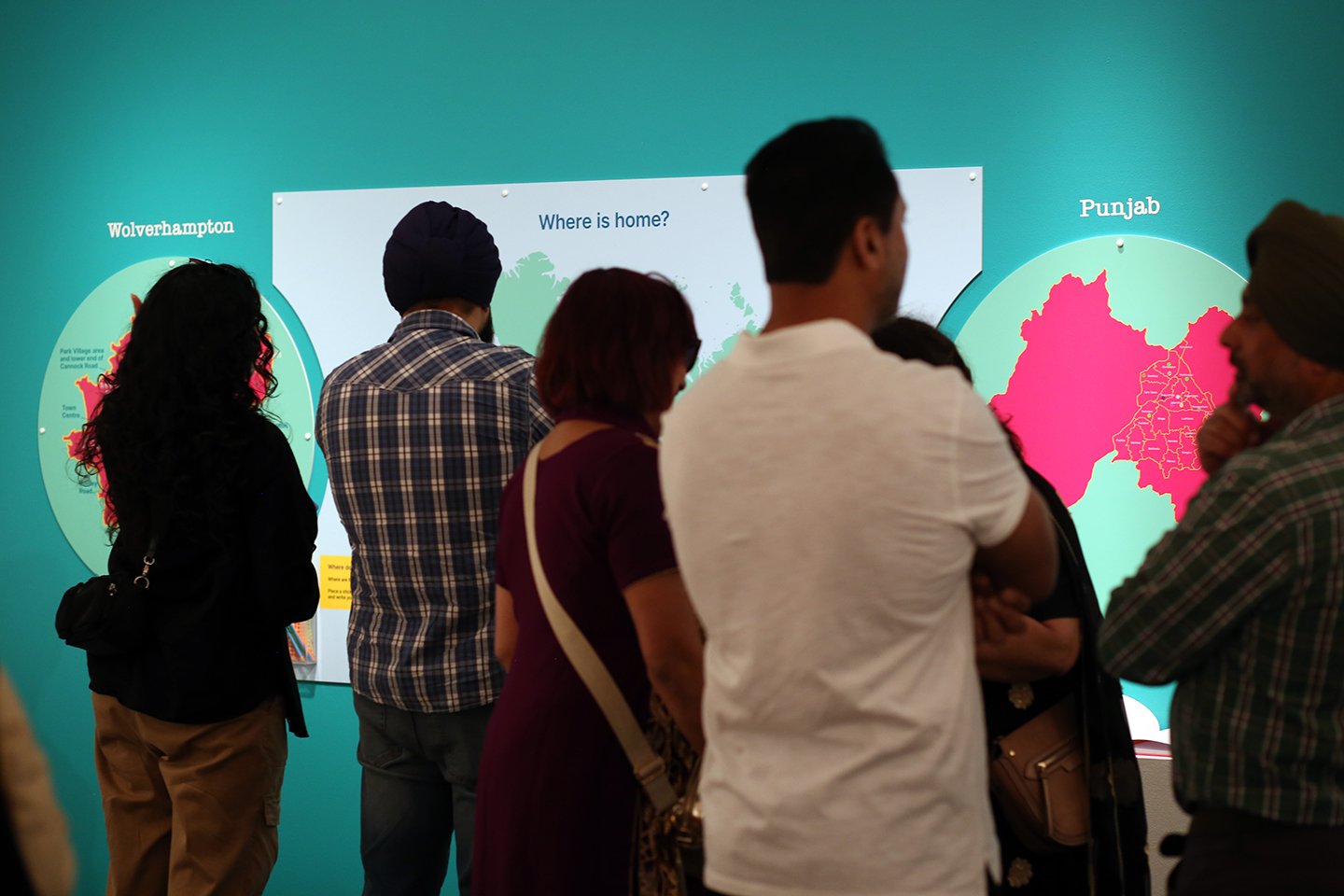
Audiences view World map along with maps of Punjab and Wolverhampton and can interact with their own country of origin on the map.

Audiences view portraits of participants co-created by them with the photographer at their former places of work.

Interpretation tranlated into Punjabi and imitated by the C UK Researcher team of volunteers. This benefited Punjabi visitors and in particular the older generation who first language is Punjabi.

Audiences listen to important historical and first hand stories about Punjabi migration by participants from th ePunjabi community at Wolverhampton Art Gallery.
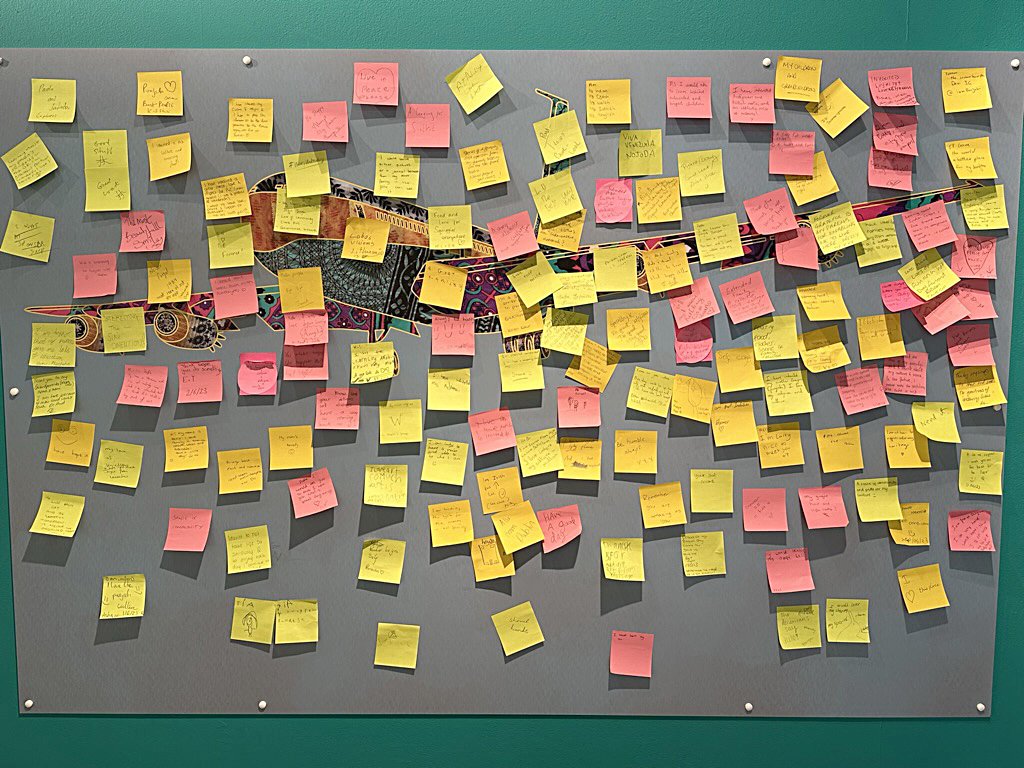
An interactive board with a plane made from Punjabi material and inspired by the research team of volunteers. A smorgasbord of opinions made by audiences interacting with the thoughts of migration to the city.